In 1943 Abraham Maslow submitted his thesis “A Theory of Human Motivation”. In the same, Maslow categorized the needs of mankind starting with physiological to self-actualization needs. Maslow conceptualized this theory to understand human emotions via reactional behavior.
According to Maslow, there are five categories of needs.
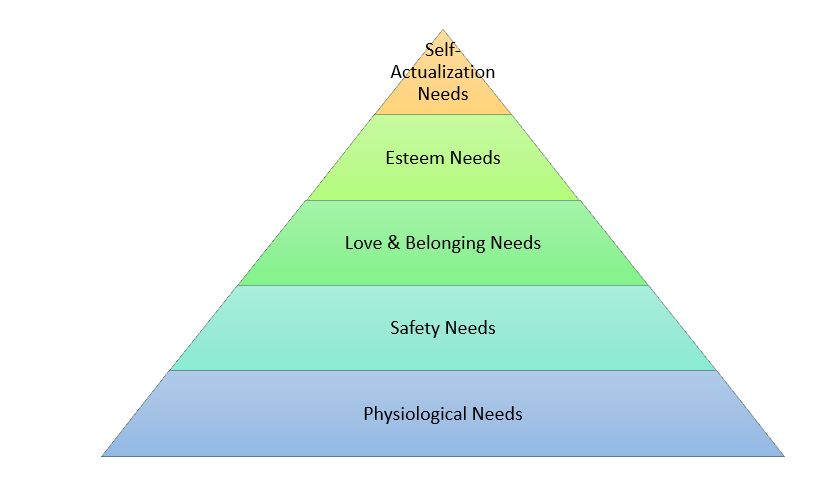
Physiological Needs:
The fundamental need of human emotion is the fulfillment of the physiological need. If the physiological need is not fulfilled, humans will not be able to move up the ladder to meet needs of higher levels.
If the person does not get proper sleep, not get sufficient food, remain thirsty, the human emotion will not be uplifted to motivate the person to move to the next need at the next level of priority, i.e. the Safety Needs.
Safety Needs:
Humans tend to have more than one savings account in banks and purchase life insurance policies, starting from their early professional life. This is regularly seen in developing countries. The reason being, in developing countries, people grow up in unpleasant environments, where they may face job loss due to the factory shutdown, a sudden lifestyle change due to war, or any other disaster.
In developed countries, the environment that humans face from childhood seems to be repetitive, hence the safety needs are apparent and expected.
Human motivational factors are reflective of how safe the environment they belong to, and how naïve their childhood was. Once the physiological and safety needs are fulfilled and getting reflected in the emotional well-being of humans, the third need is Love & Belonging to oneself.
Love & Belonging Needs:
A person needs to be accepted in the society. Individualism will be the identity. Feeling loved, and acknowledged, and getting into a romantic relationship, are a few of them where human emotion gets an upliftment. The love from society, the engagements in discussions, will surely be returned with love and human emotional intelligence.
It is to be mentioned when a society does not accept a person with love and grace and isolates him from social connections, it can prove to be detrimental to the mental well-being of the person concerned. Here, the person is getting air to breathe(physiological need), and a safe environment to grow up(safety need), however, not getting the love from the society, and stepping up to the next motivational need of Esteem is not viable.
Esteem Needs:
When people are loved, recognized, and accepted in society at large, they become self-confident and pass through a feel-good factor. Human motivation captures the same.
When creative contributions are well-accepted and receive applause, a person feels his contributions to society are important and deservedly so.
However, it is to be understood, that esteem needs can only be met after the physiological needs, safety needs, love & belonging needs, are met. We cannot skip any level or cannot prioritize the Esteem Need before fulfilling the [prior discussed motivational needs.
Self-Actualization Need:
Once a person realizes his valued presence in society by fulfilling the above four needs and becomes a motivated influencer, a fulfilling adrenalin rush brings down the ask from society. Now is the need to return what a person has collected from the society. Now is the time to share the skills acquired with different sections of society.
This is to be taken into account that self-actualization motivational need is different for people from different sections of society. For Mother Teresa it is love and care, for Ratan Tata it is philanthropism, for Richard Branson its entrepreneurship and risk partnership. (to name a few personalities.).
However, Maslow himself has also mentioned that it is not mandatory for a person to completely meet the previous need(s) in the hierarchy to move up the pyramid.
When a beggar shares food with members from his community, it meets the ‘physiological’ as well as the ‘love and belonging’ need of the beggar.
© Joydeep Kar
 Joydeep Express
Leave a comment