
Diabetes is a long-lasting ailment, when affected with, will remain with your life till your death. This is the practicality. You will follow doctoral advises, which will include medicines, insulin injection, regimental dietary habits, you will join exercise classes like Yoga, Zumba, Tabata, etc. In a nutshell, you will start taking good care of your health. You will majorly apply these actions into play once detected with diabetes, in simple terms, these are some Corrective Actions. However, you need to take Preventive actions so that Diabetes never invades your lifestyle.
Diabetes is medical condition characterized by high blood glucose(sugar) level. When you eat food, your body turns food into energy. The process of how the food is converted to energy is associated to the diabetic condition of the human body. The body breaks most of the food into glucose/sugar, and releases the same into the bloodstream. The pancreas produces the hormone insulin, and if there is an imbalance in the production of insulin, with a passage of time you become diabetic.
Generally, Insulin level in adults should be between 80-120 mg/dL (Fasting) and 100-140 mg/dL (PP-Post Prandial)
*Fasting – You need to check sugar level after 10-12 hours of fasting. Eat your dinner at 9PM, and next day morning any time between 7AM to 9AM you check the sugar level. However, make sure you don’t have breakfast, drink tea or even biscuits. You can only drink water.
*Post Prandial (PP) – After two hours of taking your breakfast or lunch, you need to check the Sugar level. Ideally, I will not suggest to check PP after dinner as the Fasting sugar level that you will take next day morning will not give an accurate result.
Diabetes, according to some researches, is also diagnosed as a genetical ailment, for example, a close family member, like father, mother, sibling has this disease. However, it is to be noted that ominously 12% to 15% of Indian population, irrespective of all ages, are diabetic. It is increasing at a rapid rate, even the “Young Brigade” is getting affected by Diabetes.
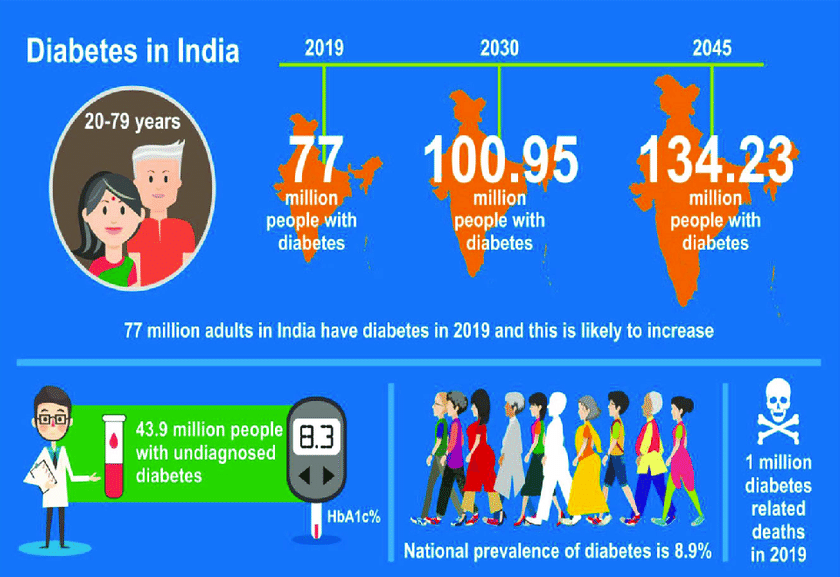
Over-bearing the expected near doubling of prevalence of diabetes from 2019 to 2045
Source: ResearchGate
It is to be noted that there are remote villages in the Indian sub-continent where the health facilities provided by the Central or State Governments are not adequate. If recorded, the Diabetic population would have shown a different graph.
There are two types of Diabetic conditions:
Hyperglycaemia – less production of Insulin, thus increasing the Blood Glucose level.
Hypoglycaemia – over-production of insulin, thus decreasing the Blood Glucose level.
I am diabetic since 2011, and hence, I will share my OWN experiences and bring to your notice important facts, practicalities, and practises which are commonly seen in INDIAN sub-continent.
In the below, I will simplify and point out: (Considering the fact that majority of sub-continental population are from MIDDLE INCOME GROUPS). These are advised for adults above the age of 18 and below the age of 50. However, I quote Victor Hugo, “Forty is the old age of youth; fifty the youth of old age”.
- Common Symptoms of Diabetes
- Preventive Actions against Diabetes
- Important food/fruits which you may take and avoid after being diagnosed with Diabetes
- Tests that Doctors usually prescribe and health related precautions
- Long term impacts of Hyperglycemia
- Home remedies
Common Symptoms of Diabetes
- Getting thirsty and drinking more water than usual.
- As a result, frequent urination.
- Tiredness and being lazy in performing even regular activities.
- Cuts and bruises taking time to heal.
- Feeling hungry even after taking a wholesome meal
- For specifically Women – frequent UTI (Urinary Tract Infection)
- Joint aches
- Problems related to Sexual life
Preventive Actions against Diabetes
- Walk for at-least 10 minutes every-day. It could be either in the morning, or, even after dinner. The best is walk with a group of “Same-thinkers”; be it with one. The practise will remain constant and inspiring.
Remember, even when you visit a shopping mall and wander through all the floors, whether you’re shopping or simply indulging in some window shopping, it takes approximately 30-45 minutes. You actually are doing a lot of exercise.
- Eat food in small portions. If your intake is three Rotis/Chapatis, eat two. If two, cut down to one. This could be lunch or dinner.
- Eat a whole fruit. Avoid juice.
- Drink Tea, without milk. Drink coffee, prefer the one without milk (Americano).
- Quit smoking, it resists Insulin.
- In some parts of INDIA, swimming classes are organised from March till August (Six months). If possible, join swimming classes.
- If you are obese/overweight, try to reduce your weight. You need to try, and your efforts will pay you dividends.
- Moderate drinking of alcohol.
- Try not to get into stress related activities which mostly leads to tension and anxiety. It could be relationship, office or business-related issues.
I know this is merely impossible nowadays, specifically for 30+ professionals, however, you need to have “Same-thinkers” around. If not, cultivate yourself, read books, learn a musical instrument, paint, write, travel all-around India. All could be done alone. I cannot guarantee that all the mentioned activities will prevent you from Diabetes, however, these will resist you from growing stress, and who knows, Diabetes will not knock at your door.
Important food/fruits which you may take and avoid after being diagnosed with Diabetes
Vegetables/Food items
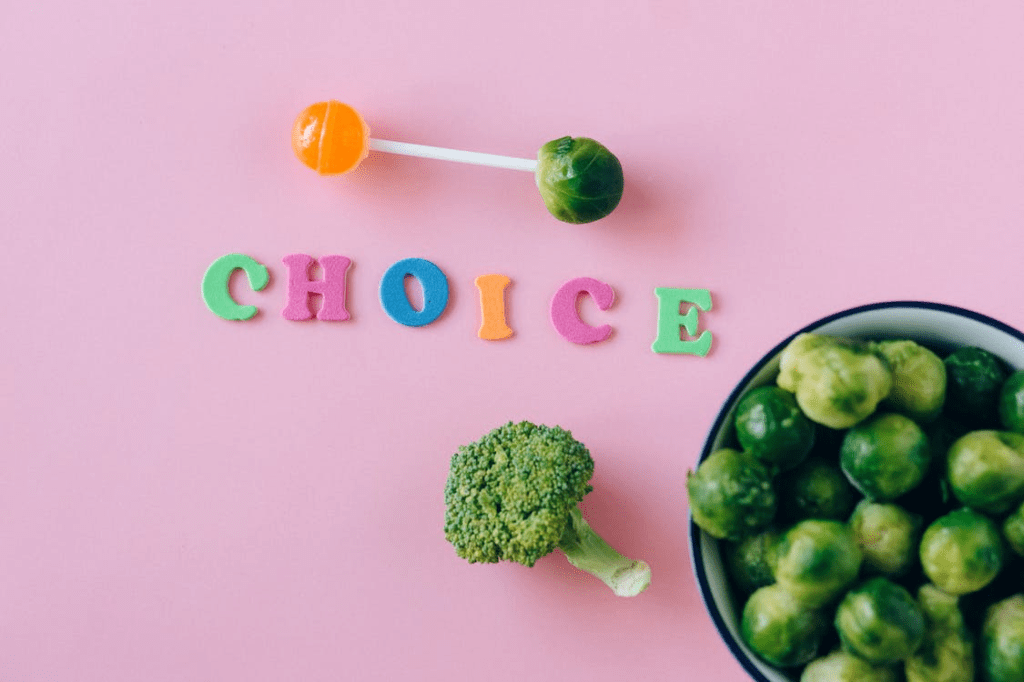
- All types of green vegetables available in the local market.
- Chicken
- Fish
- Red vegetables, Pumpkin, Eggplant, Carrot, Tomato.
- Soyabean
- All kinds of Dal/Pulses
- Lemon
Fruits
- Apple
- Papaya
- Guava
- Orange
- Coconut
- Pomegranate
- Cucumber
Strictly avoid the below food/fruits:
- Mango
- Watermelon
- Grape
- Pineapple
- Banana
- Jackfruit
- All types of Red Meat
- Potato
- Beetroot
- Sugar
- Sugar-free, Stevia
Definitely, there are more items to add in both the sections of what to eat and what not, however, I am writing in perspective to sub-continental food habit practices’.
Tests that Doctors usually prescribe and health related precautions for Diabetic patients
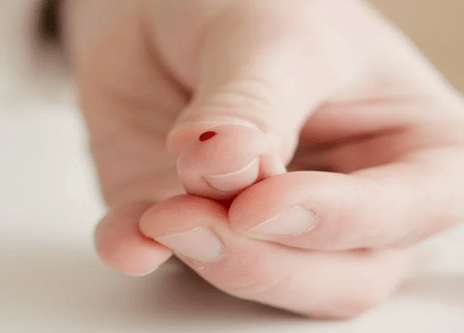
- PP, Fasting, HbA1C (It’s an average of last three months’ Glucose level. HbA1C should not be more than 7).
Even if you are visiting the Doctor for the 1st time, be it Allopathy, Homoeopathy or Ayurvedic, get the above three tests done priorly and then visit the Doctor.
- LFT (Liver Function Test for Cholesterol level)
- If you are above 40, please do a 2d ECG test once a year.
- Visit the ophthalmologist once a year if your age is above 30. Vision test should be checked.
- For women – if Sugar level is consistently high, this will lead to UTI. Maintain the washroom hygiene. Immediately go-ahead with Routine test, and follow up with Culture test. Culture test will identify which antibiotic needs to be taken to cure the UTI.
Long term impacts of Hyperglycemia
- Fatty liver & Liver Cirrhosis
- Nerve related problems – Neurology
- Vision related problems – Ophthalmology
- Teeth related problems – Dentistry
- Foot problems – Diabetology
- Heart attacks and strokes – Cardiology
- Kidney problems – Nephrology
Home remedies

- After a minimum of 8-9 hours of sleep when you wake up, take half a glass of water and fenugreek powder. Stir the powder with water and drink. Everyday empty stomach.
- Eat boiled Bitter Melon (Bitter Guard) every-day. (Atleast-2-3 days per week)
- Take Yogurt in any form.
- Take two teaspoons of Jamun Seeds Powder.
- Cut Ladiesfinger/Bhindi horizontally and soak in water overnight. Only drink the water next day morning in empty stomach.
You will definitely not practice all the home remedies at one time. And I am also sure, there must be a lot more remedial medicines practiced in the sub-continent.
Important items to be kept at home:
- All medicines, if possible, buy for the whole month and you can get discounts from Flipkart, Medplus, Lifeline, and other medicine shops. The discount can be 20% and more.
- Have a Blood Pressure Monitoring machine at home. (Suggested Brand Omron)
- Have a Blood Glucose Monitoring machine at home. (Suggested Brand Accu-Chek)
At the very end of my article, I would like to mention that you need to have faith in the Doctor treating you, the medicines prescribed by her/him, wait for at-least three to six months for the treatment to respond. The medicines will need time to get attuned to the metabolism of your body. I would also emphasize if you cannot afford any prescribed medicine, please be open to the doctor about your affordability and she/he will surely prescribe medicines which will cost you lesser. Let us fight against Diabetes and raise towards a healthy life with panache.
 Joydeep Express
Leave a comment