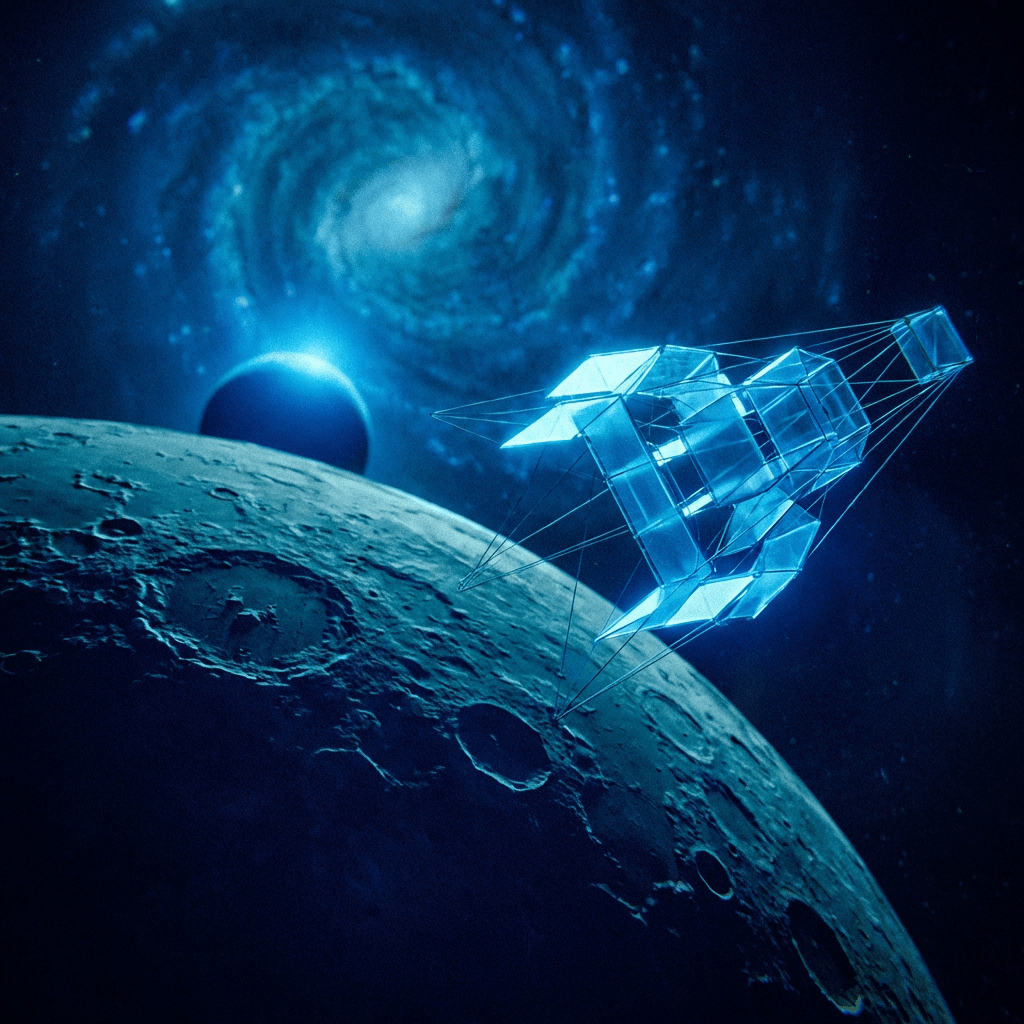
The date was 22-Jul-2019, the clock ticked at 09:13:12 UTC when Chandrayaan-2 was launched from Sriharikota, Andhra Pradesh, India. This was one of the proudest moments for the research scientists of Indian Space Research Organization (ISRO).
The target objectives of Chandrayaan-2 were:
- To soft-land on the Moon.
- To get into a thorough study, specifically, the south pole of the Moon. This is because there exists a deep inter-linkage between the history of the Moon’s evolution and emergence of the solar system.
- To study the soil and trace minerals, water molecules and elements.
- To study the organic structural changes and behavioural patterns of the electrons present in the Moon’s ionosphere

Pic Courtesy: Insightsonindia.com
Chandrayaan-2 comprised of three modules-
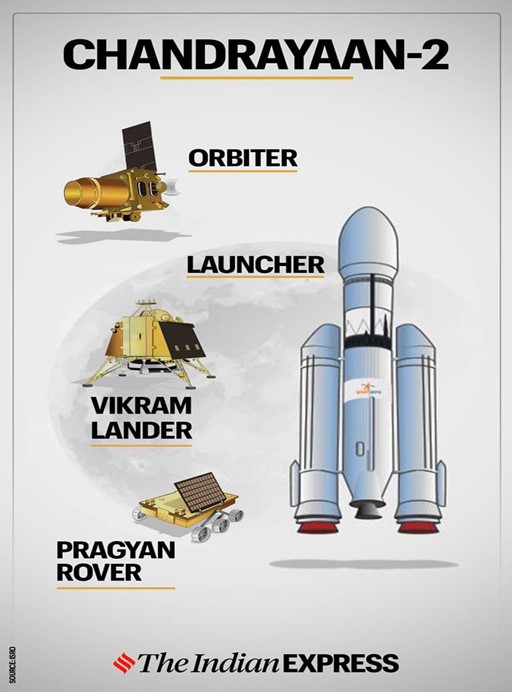
Image Source: The Indian EXPRESS
The Central Tool Room and Training Centre (CTTC), Bhubaneshwar, India, was in charge of manufacturing the components of the spacecraft.
The main components of the spacecraft were:
Twenty-two types of Valves for fuel injection purpose
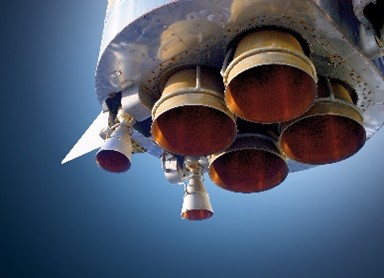
Cryogenic engines to reduce the cost of launch operations
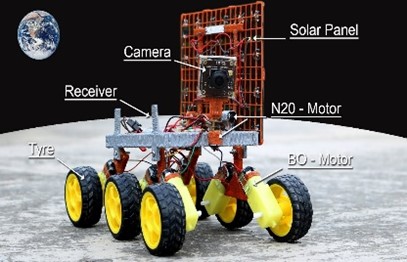
The six “LIMBS of Pragyan” to rover over the lunar surface of the Moon
Solar Array Drive Assemblies (SADA) to support the solar panels slanting at an angle to the Sun, thus, thrusting maximum power generation.

Momentum wheel assembly (MWA) to provide steadiness, authority and controlling energy impulsion from Orbiter.
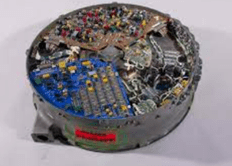
Reaction wheel assembly (RWA) to control the satellite altitude
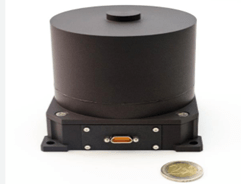
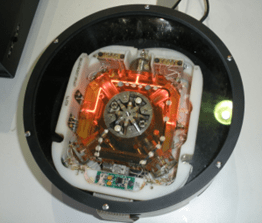
Dynamically tuned gyroscope (DTG) to act as inertial guidance system to achieve high degree of precision
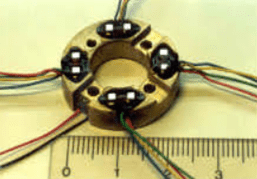
Isro laser gyroscope (ILG) for performance steadiness and accurate soft-landing to the Moon.
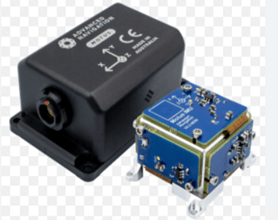
Mini advanced inertial navigation system (AINS) to circumnavigate the lander to soft-land to the lunar surface of the Moon
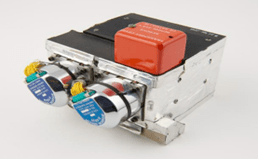
Rate gyro electronic package device (RGPD) to measure the angular velocity of the lander during its soft-landing to the Moon.
Did Chandrayaan – 2 failed in its mission?
Nevertheless, it is to clarify that the Chandrayaan-2 mission partly failed to achieve all the objectives and getting the desired outcomes. The lander Vikram which was capable of understanding directions via simulations by the experts, swerved from its planned orbital path. This was when Vikram was at a distance of 20 km from the lunar surface of the Moon. The lander also deviated from its set inclined velocity of landing. The speed at which Vikram was approaching the lunar surface of the Moon was much higher than the expected speed. As a result, Vikram took a summer-sault and started approaching the Moon. Vikram’s velocity increased during the descent. In concurrence to these events taking place, a sudden malfunction in the automatic controls of the Lander was observed, resulting into the Lander going topsy-turvy. Capturing the lunar images was not feasible now. There was a disconnect between Vikram and space-station scientists and thus, Chandrayaan-2 could not fulfil all the objectives of the mission Chandrayaan-2. The dramatic sequences ended when Vikram was just 2 km away from the surface of the Moon.
It is important to note, Pragyan Rover could not function at all as it was integrated in Vikram Lander.
Officially, the mission aborted on 6-Sep-2019.
Arguably, two fundamental factors were presented by ISRO to the Parliament on why the mission was a “Partial Success”:
- Malfunction in attained velocity and target velocity of Lander (Vikram) during descent
- Erroneous maneuvering by space station scientists
Eminent Astrophysicists stated that the Orbitar operated as expected, however the Lander could not make a soft-landing to the moon and correctly, Chandrayaan-2 is not a “TOTAL FAILURE” mission.
The Chandrayaan-2 mission incurred a total cost of approximately 900 crores. However, the Government of India stood by the project and ISRO and as of today, funded ISRO with Chandrayaan-3 to move ahead in its expedition to the vacant space on the Earth and beyond.
A write-up on Chandrayaan-3 will follow sooner…
 Joydeep Express
Leave a comment