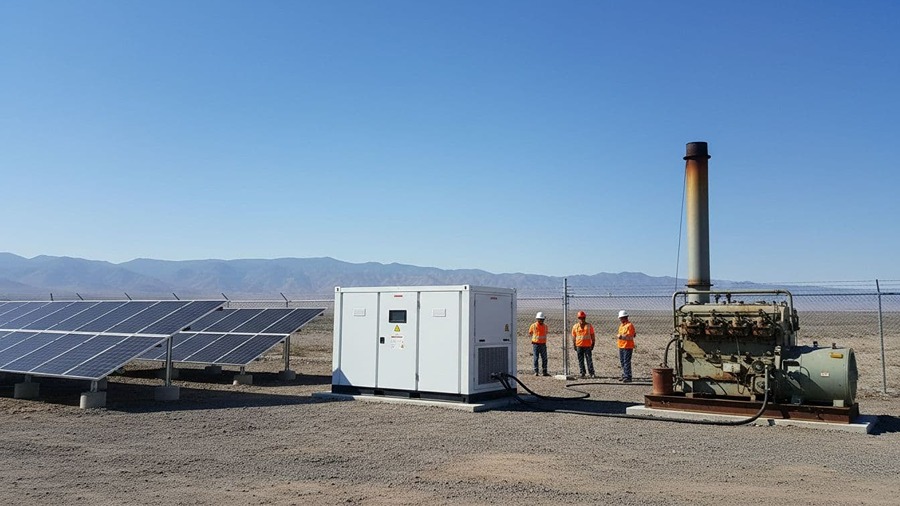
Picture a diesel generator behind a fence, humming through the day to keep a site running. Someone is tracking fuel levels, scheduling deliveries, and hoping the engine doesn’t throw a surprise fault at 2 a.m. Workers raise their voices over the noise. There’s the smell, the smoke, and the constant sense that power costs are a moving target.
That mix of operational hassle, rising costs, and growing pressure to cut emissions is pushing a global shift. Solar paired with battery storage is no longer a niche solution for remote cabins or pilot projects. It is now showing up at construction sites, mines, farms, factories, hospitals, telecom towers, and community microgrids around the world.
This does not mean diesel generators are disappearing overnight. In most real-world projects, the end state is practical rather than ideological: solar and batteries handle daily power needs, while a smaller generator remains on-site as backup for rare edge cases. What has changed is which system does the heavy lifting.
Why diesel generators are losing the cost and reliability battle
Diesel generators earned their place because they are familiar, flexible, and quick to start. But over a 10- to 15-year operating life, the economics and operational burden become hard to ignore. Diesel can look inexpensive at purchase time, but the meter keeps running every hour it operates.
Across regions and industries, the same pressures keep surfacing:
- Fuel prices are volatile and often rise over time
- Maintenance is unavoidable, and failures rarely wait for business hours
- Fuel logistics become a risk, especially for remote or off-grid sites
- Noise and exhaust create friction with staff, communities, and regulators
Even grid-connected sites feel this strain. Many businesses install generators as insurance, then find themselves running them more often than planned due to unstable grids, high demand charges, or site expansions that outgrow existing capacity. The more hours an engine runs, the faster fuel, servicing, and parts costs accumulate.
The result is a budgeting problem. Diesel costs can feel manageable one month and painful the next. Solar plus battery storage changes that pattern by shifting most energy costs from ongoing fuel purchases to upfront equipment that produces power on-site.
Diesel looks cheap upfront, but fuel and logistics never stop
Buying a generator is a one-time decision. Running it is a recurring expense. Fuel prices track global oil markets, local taxes, transport costs, and currency shifts. In remote locations, that price often includes the hidden premium of trucking fuel over long distances, storing it securely, and managing theft risk.
Mechanical reality adds another layer. Diesel gensets need regular oil and filter changes. Hoses age. Injectors clog. Batteries fail. Turbos wear. The cost is not just parts, but labor, downtime, and the ripple effects when power interruptions stall operations.
Load variability makes things worse. Many sites run generators at inefficient partial loads because demand rises and falls throughout the day. Light loading wastes fuel and increases maintenance issues, meaning operators pay twice: once at the pump and again in service calls.
Fuel supply chains create failure points
A diesel generator depends on a supply chain. Flooded roads, port closures, storms, or geopolitical disruptions can delay fuel deliveries. Even in stable regions, a broken truck or paperwork delay can create unexpected outages.
Solar power does not rely on weekly deliveries. Once panels are installed, the fuel arrives daily as daylight. Batteries complete the system by storing excess energy so sites can operate after sunset or through short cloudy periods.
There is also a maintenance difference that operators quickly notice. Engines have many moving parts. Batteries and power electronics have fewer wear components. Fewer fluids, fewer emergency call-outs, and fewer surprise breakdowns translate into more predictable operations.
For large energy users weighing “more diesel” versus “less diesel,” this shift is no longer theoretical. In mining and heavy industry, projects are being signed because solar plus storage can beat diesel on delivered energy cost in the right conditions, as seen in recent copper mine solar-and-storage deals in the Democratic Republic of Congo.
How solar plus battery storage does the same job with less hassle
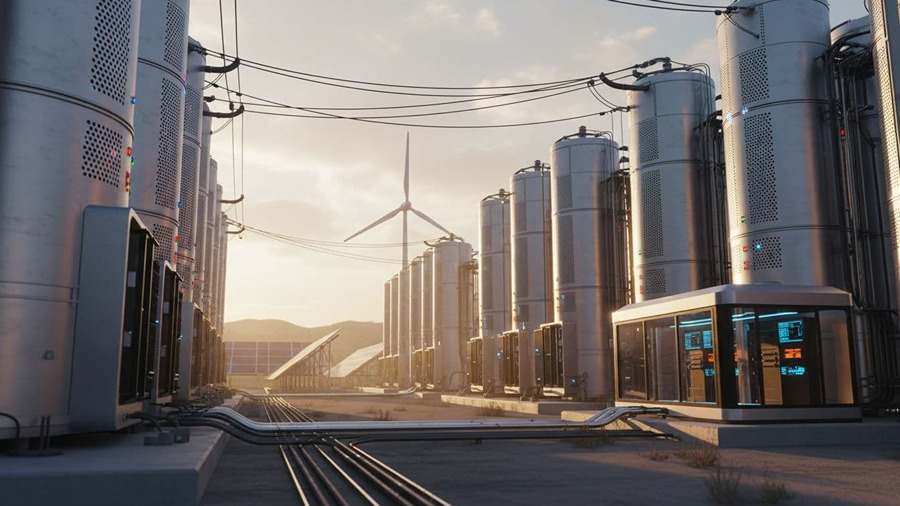
Solar plus battery storage works because it matches how real sites use power. Loads change hour by hour. Most operations do not need peak power all the time; they need stable power all the time.
A typical system works like this:
- Solar panels generate electricity during daylight
- On-site loads use solar power first
- Excess solar energy charges the battery
- The battery supplies power at night, during peaks, or when the grid fails
Many installations are hybrid systems. Hybrid does not mean abandoning diesel entirely. It means the generator stops being the default source and becomes the last line of defense.
This shift changes daily operations. Instead of managing fuel deliveries and engine servicing, teams monitor battery state of charge, solar output, and load trends. Remote monitoring is common, which matters for distributed assets like telecom towers, rural clinics, and construction fleets.
A well-designed hybrid controller also protects equipment. It prevents deep battery discharge, starts the generator only when necessary, and runs the engine at healthier load levels when it does operate. That improves fuel efficiency and reduces wear.
Why batteries outperform engines for peaks and disturbances
When a grid fails or a large motor starts, demand spikes instantly. Batteries respond almost immediately. That fast response stabilizes voltage and frequency, protecting sensitive equipment and reducing nuisance shutdowns.
Batteries also enable peak shaving. During high-use moments, stored energy supplies part of the load so the site avoids pulling maximum demand from the grid or forcing the generator to ramp aggressively. For grid-connected businesses, this can reduce demand charges. For off-grid sites, it cuts fuel burn and engine stress.
This is why the conversation is shifting from “How big should our generator be?” to “How do we handle peaks cleanly?” Battery-first designs are increasingly common, with generators reserved for unusual events rather than daily operation.
Hybrid systems can cut diesel runtime by 70 to 90 percent
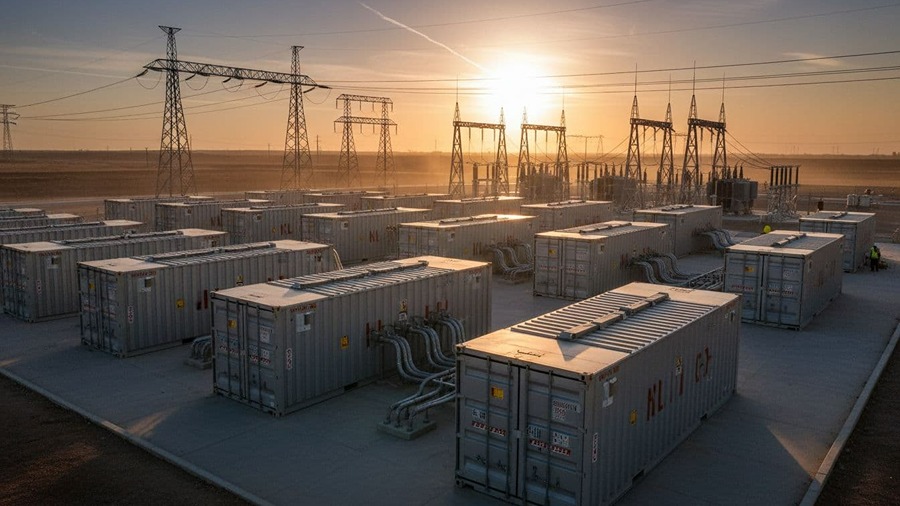
When solar and batteries become the primary supply, diesel runtime often drops sharply. Many projects report reductions of 70 to 90 percent once systems are tuned and operators trust the automation.
Instead of running 24/7, a generator may operate only a few hours on a heavily overcast day or during a rare multi-day weather event. That change brings immediate benefits:
- Fewer fuel deliveries and smaller on-site fuel storage
- Quieter working environments, especially at night
- Less engine wear and longer maintenance intervals
- Higher overall uptime through multiple power sources
This approach is spreading into temporary power as well. Battery systems designed for worksites now pair with standard gensets so engines run less while batteries handle fluctuations. The rise of monitored, site-ready battery units, including products like the ProCharge BESS referenced in recent industry coverage, shows how quickly the construction market is adopting hybrid power.
Cleaner, quieter sites and easier compliance
Cost and reliability often drive approvals, but the day-to-day impact is what people feel. Diesel changes the environment around it. It is loud, vibrates, and produces exhaust where people work and live. Solar and batteries shift most operating hours from fuel combustion to stored electricity.
That matters to three groups:
- Communities, which experience less noise and air pollution
- Businesses, which face fewer complaints and easier compliance with internal climate targets
- Governments and investors, which increasingly require emissions reporting and risk disclosure
Regulatory pressure is tightening in many regions, especially around noise and local air quality. Solar photovoltaic systems paired with storage give organizations a way to show measurable progress without waiting for major grid upgrades. For a global view of why solar PV and storage are becoming foundational infrastructure, IRENA’s Solar PV and Storage Key Enablers report provides useful context.
Falling battery prices are accelerating adoption
The economics have improved quickly. BloombergNEF reports that average lithium-ion battery pack prices fell to around $108 per kWh in 2025, mentioned in BloombergNEF’s battery price update. Lower battery costs improve payback, especially where diesel is expensive or difficult to deliver.
Battery chemistry has matured as well. Lithium iron phosphate (LFP) is now common in stationary storage because it supports long cycle life and strong safety performance when properly engineered.
Incentives add another push. While programs differ by country, rebates, tax credits, and financing tools reduce upfront costs and help projects pencil out faster. Australia’s recent focus on home batteries, and broader energy storage trends to watch in 2026, highlight how policy and supply chains continue to shape deployment. For large systems, NREL’s 2025 utility-scale battery cost projections offer grounded insight into where storage economics are heading.
“For many industrial users, the shift toward solar and storage is being driven by reliability and operating costs, not just sustainability goals,” said Jérôme Pécresse, CEO of GE Vernova.
Where diesel still makes sense in a smart transition
A realistic energy transition acknowledges limits. Diesel remains difficult to beat for energy density in extreme cases, such as prolonged low-sun periods, very high industrial loads, or sites with minimal space for panels.
The most common end state is straightforward: solar and batteries first, diesel last.
Teams that succeed with this transition start with fundamentals. They measure actual loads, identify truly critical equipment, and size systems around real operating patterns. They also plan for growth. A system that works today may fall short if expansion is not factored into the design.
Common constraints and practical responses
Some challenges are physical rather than financial:
- Extended low-sun periods: Address with additional storage, more solar capacity, load controls, or an efficient backup generator
- Heavy industrial start-up loads: Use batteries sized for surge power, soft-start drives, or staged equipment starts
- Limited panel space: Combine rooftop and ground-mount solar, higher-efficiency modules, or complementary generation sources
- 24/7 critical operations: Retain diesel as backup, but use controls to ensure it runs only when battery state of charge and forecasts require it
A well-designed hybrid system does not eliminate risk. It reduces everyday risk and covers remaining extremes with a smaller, better-used generator.
A simple decision checklist before you commit:
Before engaging vendors or signing contracts, consider:
- Average and worst-case generator run hours
- Delivered fuel price and how often it changes
- Fuel delivery risks, including weather and access
- Uptime requirements and load criticality
- Noise and exhaust constraints
- Available space for solar installations
- Budget, financing options, and incentives
- Backup strategy, whether diesel or additional battery capacity
Start with an energy audit and at least a week of load data. For complex sites, pilot one building or critical circuit before scaling.
Conclusion
Diesel generators still start fast, but they are expensive to run and easy to underestimate. Solar paired with battery energy storage cuts fuel use, reduces maintenance surprises, and makes power costs easier to plan. Hybrid systems preserve reliability by keeping diesel available for rare extremes, while shifting daily operations to cleaner, quieter power.
For many sites, the question is no longer whether solar and batteries can replace diesel, but how much diesel they still need.
 Joydeep Express
Leave a comment