
You open the Gemini app, type a messy request, and expect the usual. Then something shifts. The reply doesn’t just sound confident – it stays organized. It asks a question, lays out steps, and avoids jumping to conclusions. In the same session, you ask for a soundtrack and get something usable.
That’s the story this month. Google upgraded Gemini with two updates that feel connected: stronger reasoning through Gemini 3.1 Pro and built-in AI music creation powered by Lyria 3. Here’s what changed, where you can use it, and what to watch when relying on it for work or creative projects.
The Brain Upgrade

When people say an AI got “smarter,” that can mean anything. In practice, the Feb’2026 upgrade shows up where chatbots usually wobble: long tasks, mixed constraints, and multi-step plans.
Gemini 3.1 Pro rolled out around February 19–20, 2026 as a preview model. The goal sounds simple: fewer wrong turns while thinking. The model will track your requirements, stick to a plan, and correct itself when something doesn’t add up.
Google positions this as improved reasoning for complex work across coding, research, and problem-solving. It’s not about flashy answers. It’s about disciplined thinking. Google’s Gemini 3 overview explains how the AI has grown in reasoning and multimodal understanding over time.
Gemini 3.1 Pro appears across several Google products, depending on your plan: the Gemini app, NotebookLM Pro and Ultra tiers, the Gemini API and Google AI Studio, Android Studio, and enterprise surfaces like Vertex AI. Because this is a preview rollout, availability and toggles may evolve.
What You Notice
“Better reasoning” feels like cleaner sequencing.
Ask Gemini to build a two-week Python learning plan with daily constraints. Older models often returned generic lists. This version is more likely to restate your constraints, create a schedule, and match the project to your level.
It shows up in debugging. Instead of guessing, Gemini may offer structured steps like confirming inputs, reproducing the issue, and isolating the culprit. For explanations, ask about a complex concept, and it may define key terms first and build a layered, understandable narrative.
Music Inside Gemini
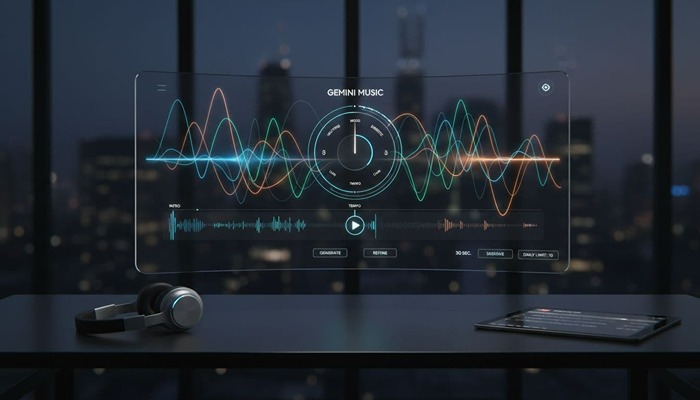
The second upgrade shifts from logic to mood.
Through Lyria 3, Gemini now includes music generation inside the app. If the brain upgrade helps you plan projects, the music tool helps you score them.
Describe a vibe, tempo, or style. Lyria 3 generates short tracks — often ~30 seconds — that you refine through iteration. It’s built for quick drafts and practical use, not studio-grade perfection.
Most users don’t need flawless production. They need something good for a YouTube intro, product demo, classroom project, or focus playlist. Lyria 3 reduces the “blank timeline” problem. You start with sound, not silence. Some plans include daily generation limits, so check your tier.
Steering the Sound
Think of Lyria 3 as steering rather than composing.
Start with a mood: calm, tense, or bright.
Add instruments, tempo, and pacing.
Generate. Listen. Revise.
Revision matters. One prompt rarely nails it.
Simple prompts often work best:
- “Warm lo-fi beat for studying, soft drums, gentle bass, no vocals.”
- “Upbeat synth intro for a tech video, bright chords, punchy kick.”
Expect limitations. Style may drift. Hooks may repeat. It can take several tries before the track feels right. Treat the first result as a sketch and refine your prompt.
Practical Uses
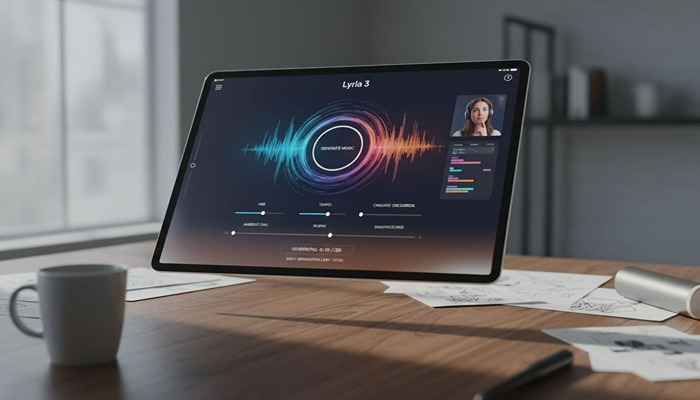
Lyria 3 is strongest when speed matters:
- Short-form video background music
- Podcast intros
- Classroom slideshows
- Internal team videos
- App and product demos
- Game prototypes
- Focus playlists
It lowers the barrier to creation without production software or sound engineering skills.
Still, be cautious. Avoid copying an artist’s style. Review usage terms before commercial release. Keep records of prompts and versions, especially for paid projects.
To Conclude…
Two practical upgrades stand out. Gemini 3.1 Pro cuts logical drift in long, complex work. Lyria 3 turns a prompt into a soundtrack in minutes. Together, they shrink the gap between idea and output. You can outline a plan and score it in the same workspace. That feels less like a chatbot and more like a creative studio.
Treat results as drafts, not decisions. When the stakes are high, double-check numbers, verify legal interpretations, and make the final call yourself.
The larger shift isn’t just stronger reasoning or faster music generation. It’s integration. AI is moving from isolated tools to unified platforms that can think, structure, and create in one place.
So what project are you planning this week? And what soundtrack would push it over the line?
 Joydeep Express
Leave a comment