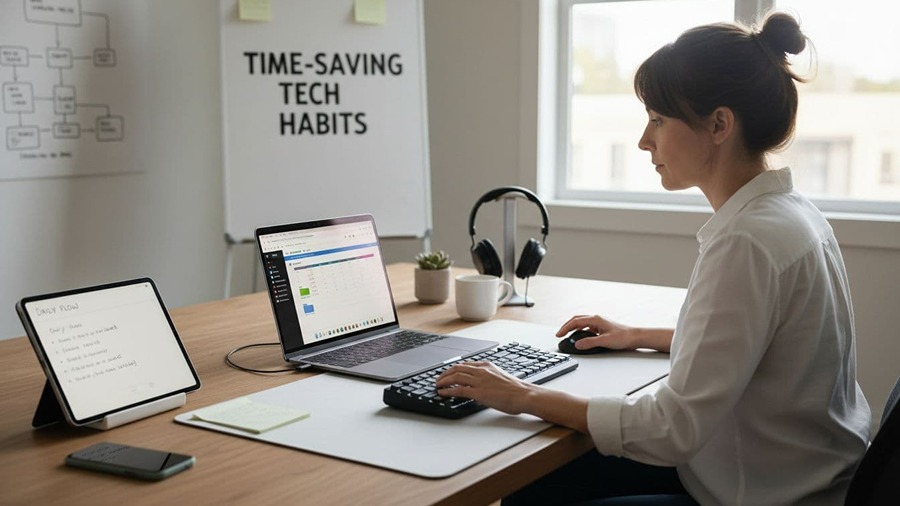
Tech habits shape how you use your devices each day. Small delays don’t feel costly in the moment. Yet checking random apps, hunting for files, and repeating the same clicks can quietly eat an hour.
The good news is simple: tech habits that save time don’t require expert skills. A few low-effort changes can improve time management and make your phone and laptop work better for you today, helping cut down screen time.
As Cal Newport said: “I equate productivity in the personal context to a combination of two forces, organization and intention.”
Start With Habits That Reduce Digital Clutter
Turn Off Non-Essential Notifications
Every alert asks for attention, even when you ignore it. That split-second glance adds up, and it makes it harder to get back on track. Distraction blockers like muting non-essential notifications enable deeper work by helping you focus without interruptions.
For example, a person who checks email and message every 10 minutes may feel busy all day, but still finish less work. When they switch to checking messages only three times a day, often get more focused time and make fewer mistakes.
Keep calls, calendar reminders, and messages from key people. Mute shopping apps, social feeds, game alerts, and most news apps. If needed, use Do Not Disturb on your smartphone during work blocks.
Use a Password Manager
Typing passwords, guessing old ones, and resetting accounts wastes time fast. A password manager fills logins for you, so sign-ins become almost instant.
It also helps you stop reusing weak passwords while supporting secure two-factor authentication. If you want options, this roundup of the best password managers is a helpful place to compare tools.
Keep Your Devices Clean and Organized
Mess on a screen works like mess on a desk. You can still function, but every task takes longer.
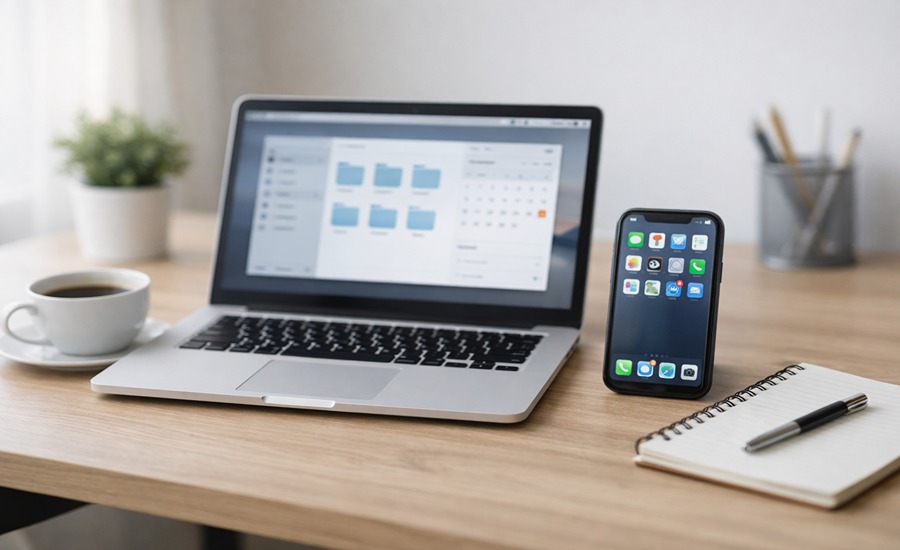
Create clear folders, such as Work, Personal, Bills, and Photos. Group similar apps on your phone. Then spend five minutes each week deleting junk from Downloads, screenshots, and unused tabs. You’ll find things faster, your brain will feel less crowded, and your overall digital well-being will improve by reclaiming your digital space.
Let Your Devices Handle Repetitive Tasks
Automate Small Tasks
If you repeat a task three times a week, automate part of it. Set recurring reminders, powered by natural language processing, for bills, medications, or trash day. Use keyboard shortcuts for your email, address, or common replies. Add default travel time to calendar app events, and turn on focus modes by time or location.
To see the results of your automation, consider tracking time on these activities.
That’s a practical example of how to use technology to save time, without changing your whole life. Apple’s guide on using Shortcuts on iPhone shows how simple these automations can be.
Sync Files Across Devices
Emailing files to yourself is a red flag. So is having three versions of the same document.
Cloud storage keeps the latest file available on your phone, tablet, or laptop. As a result, you spend less time searching and less time fixing version mix-ups. An overview of cloud sync basics explains why this habit saves both time and frustration.
Build Habits That Improve Daily Productivity
Batch Email and Messages
Constant checking feels productive, but it promotes multitasking and breaks focus. Instead, check messages at set times, such as morning, midday, and late afternoon. Use the Pomodoro method to structure focus sessions in between. You’ll reply with more focus and protect your best work time.
End the Day With a Two-Minute Reset
Before you finish your day:
- Close extra tabs
- Plug in your devices
- Open the files/apps you need for tomorrow
- Check your next day’s schedule
For busy schedules, this is one of the best tech habits for busy people because it combats decision fatigue, streamlines your morning routine, and makes the next day lighter.
Make It Work in Real Life
You don’t need a huge reset to save time. Start with one or two habits, then add more when they feel natural. The best daily tech habits for productivity build sustainable productivity through digital mindfulness, because small wins stack up faster than most people think.
 Joydeep Express
Leave a comment